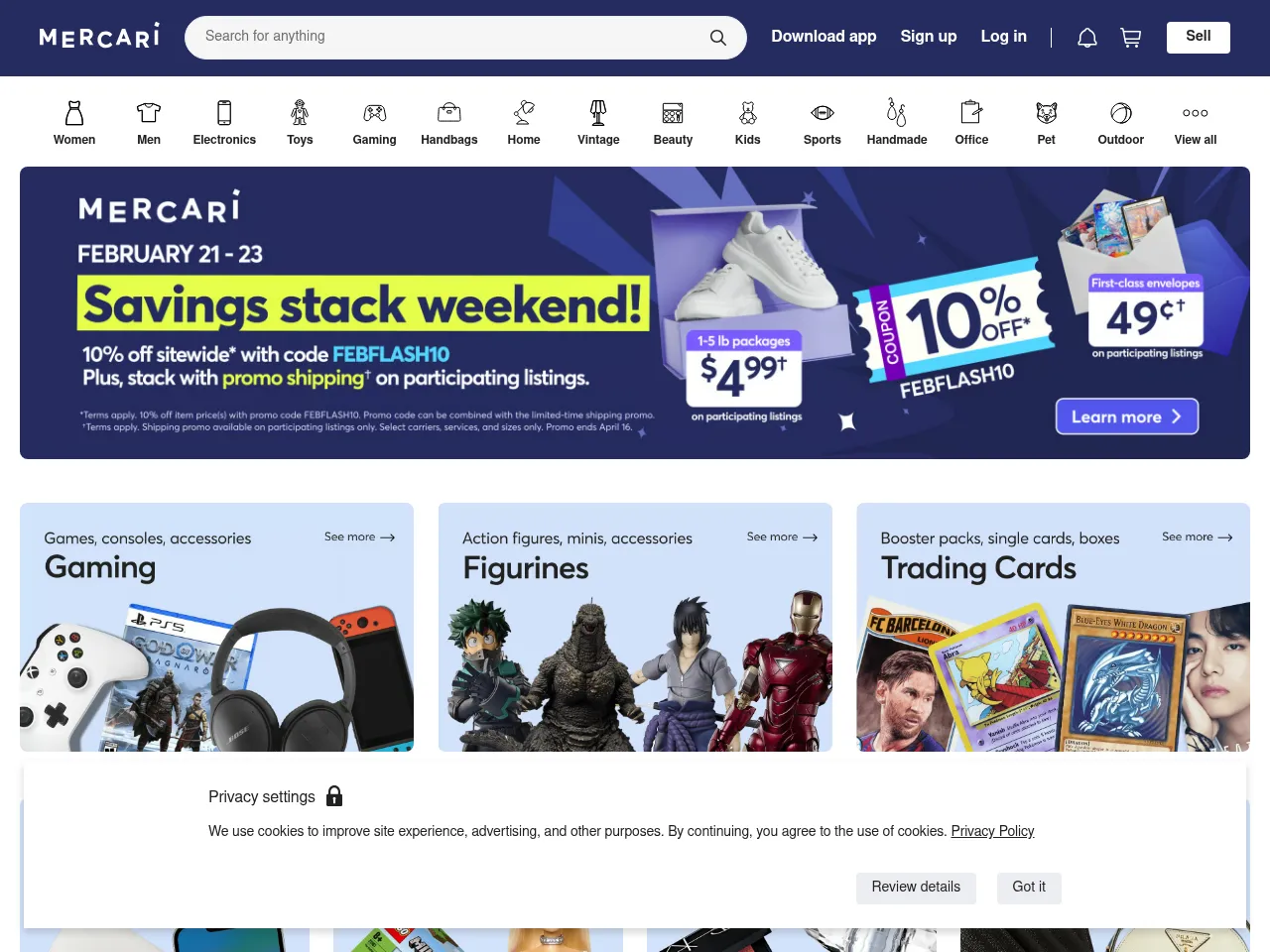
Mercari
About
Fashion, shoes, bags, and accessories are top categories. Features include Mercari Local, Mercari Authenticate for luxury verification, and streamlined mobile listing. Payment is handled via escrow, releasing funds after buyer confirmation. The 10% selling fee is competitive with other resale platforms.
Vintage & Thrift
Mercari is a major peer-to-peer marketplace with over 50 million U.S. app downloads, strong in secondhand fashion with authentication services for luxury items.
Store Details
Mercari offers an enormous marketplace for secondhand goods with an easy listing process that has attracted millions of sellers. The breadth of inventory is genuinely impressive -- you can find nearly anything from fashion to electronics to collectibles. The app experience is smooth and the buying process is straightforward. However, the platform struggles with quality control: item descriptions can be misleading, authenticity verification is minimal, and the 3-day return window after delivery is extremely tight for assessing condition accurately. No free shipping exists as standard, and there is no loyalty program. Seller reliability varies dramatically, and dispute resolution can be frustrating. Mercari works best for experienced secondhand shoppers who know how to evaluate listings critically and are comfortable with marketplace risk, but it lacks the trust infrastructure of platforms like eBay or Poshmark.
 Powered by Rexiew